Marketers agree that there’s too much going on at the same time in social media. It is a high energy environment pulsing through inexhaustible platforms and messages, where it’s hard to keep track of just about anything. However, this same world reflects rich insight on what is going on with just about anything, including your brand.
Today, businesses dispose of marketing technology that allows them to track product, event and brand success 24/7. The digital conversation about a service, a personality or an advocacy is accessible and easy to listen to.
What many of us still wonder about is which social media metrics to be looking at when monitoring and measuring brand success. There are hundreds of tools out there, offering different sets of metrics. In reality, you only need to take 5 metrics into account to get started on making your reports valuable. If you can track them, you can advise your team or client on how to strengthen social media presence and brand reputation.
Here are the key metrics to start from when building your or your clients’ social media strategy:
1. Brand mentions volume

The basis of your listening report is the number of brand mentions. Even if it sounds too easy, looking at these numbers has its value, because it helps you with evaluating trends and setting targets.
Trends – the increase or decrease of conversation volume. Fluctuations in mention numbers are extremely informative, regardless of sentiment, and can give perspective for the short or long term on how much visibility a brand has.
Benchmarking – the target number of mentions which you would like your brand to have during a particular time period. These numbers should be determined on a daily, weekly or monthly basis if you want to know whether your brand is generating enough engagement in social media. Read more about the use of mentions volume as a social media metric, here.
2. Voice share %
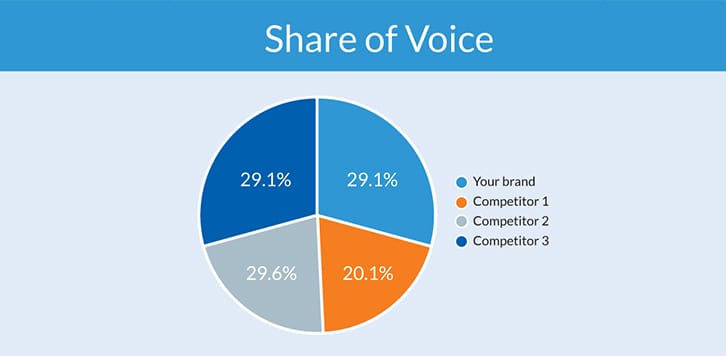
This metric determines the number of mentions your brand generates against the brand mentions of your competition. If your brand is coming up as the one with the largest share in the social conversation, then you’re engaging in the right way. If your brand is not as vocal as your competition though, it is possible that you don’t have the most appropriate social media strategy in place. This metric is especially useful when you report on brand success to your clients or are submitting to them a revised action plan for social media engagement.
At Onboard CRM, we use Social Studio from the Salesforce Marketing Cloud to determine and analyze voice share. This platform has the capability to capture public posts of any brand, no matter where in the world the mention was made, which gives a clear-cut view of the brand position against its competition.
Get in touch with us if you want to determine Share of Voice of your brand and act upon the results.
3. Share of Conversation

This metric is applicable for reporting on specific topics, discussed in social media. It is more precise than share of voice as it can show you how many mentions your brand has in discussions of trends, new solutions or products. For example, your client is a mobile network provider and they want to know how their brand is positioned against other competitors in terms of network coverage and call services. Illuminating specific sub-topics, makes it possible to see the specific conversations in which your brand is mentioned and how successful it is.
4. Positive Sentiment
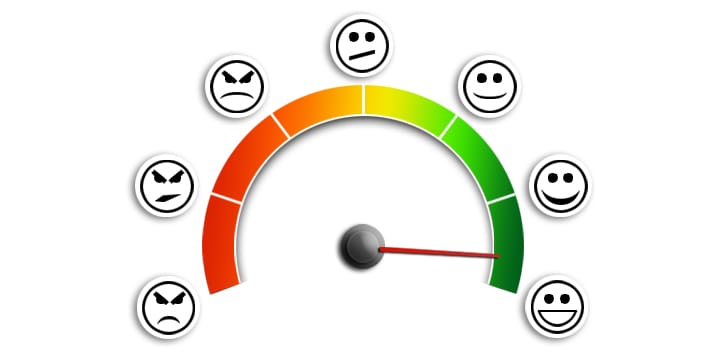
Business is at social speed today and doesn’t allow us to sit back and simply enjoy looking at the number of positive mentions a brand gets. Marketers actually plan what to do with the percentage and types of these smileys.
This metric shows the number of people in social media who speak well of your brand. From these conversations, you can reinforce the positive recognitions of your solutions and organization in your social media activities.
The percentage of positive mentions should be strictly monitored. Any decrease is significant for your brand’s health, because this can mean that the negative mentions are growing in number. Our social media team pays special attention to this metric as it is key to brand’s success and the kind of communication tactics can counter potential problems here.
5. Negative Sentiment

The percentage of negative mentions is probably more important than the positive share of the social conversation. Aside from merely looking at the number of negative mentions you are getting, you should use this metric to guard your brand from getting more critical reviews.
Increase in negative mentions may create a threat to your brand’s health, so keeping this metric as low as possible is essential. The truth about negative mentions is that they won’t go away, but brands can take steps to change the customer attitude and decrease their negative reputation in social media.
As social listening has become a standard part of the marketing operations of many companies, the metrics we discussed just now are forming the core of social listening reporting, regardless of industry. Keeping the social conversation in check can help your brand advance with confidence in an increasingly digital world. Contact us to request a free demo of the social listening insights Onboard CRM can provide you with.