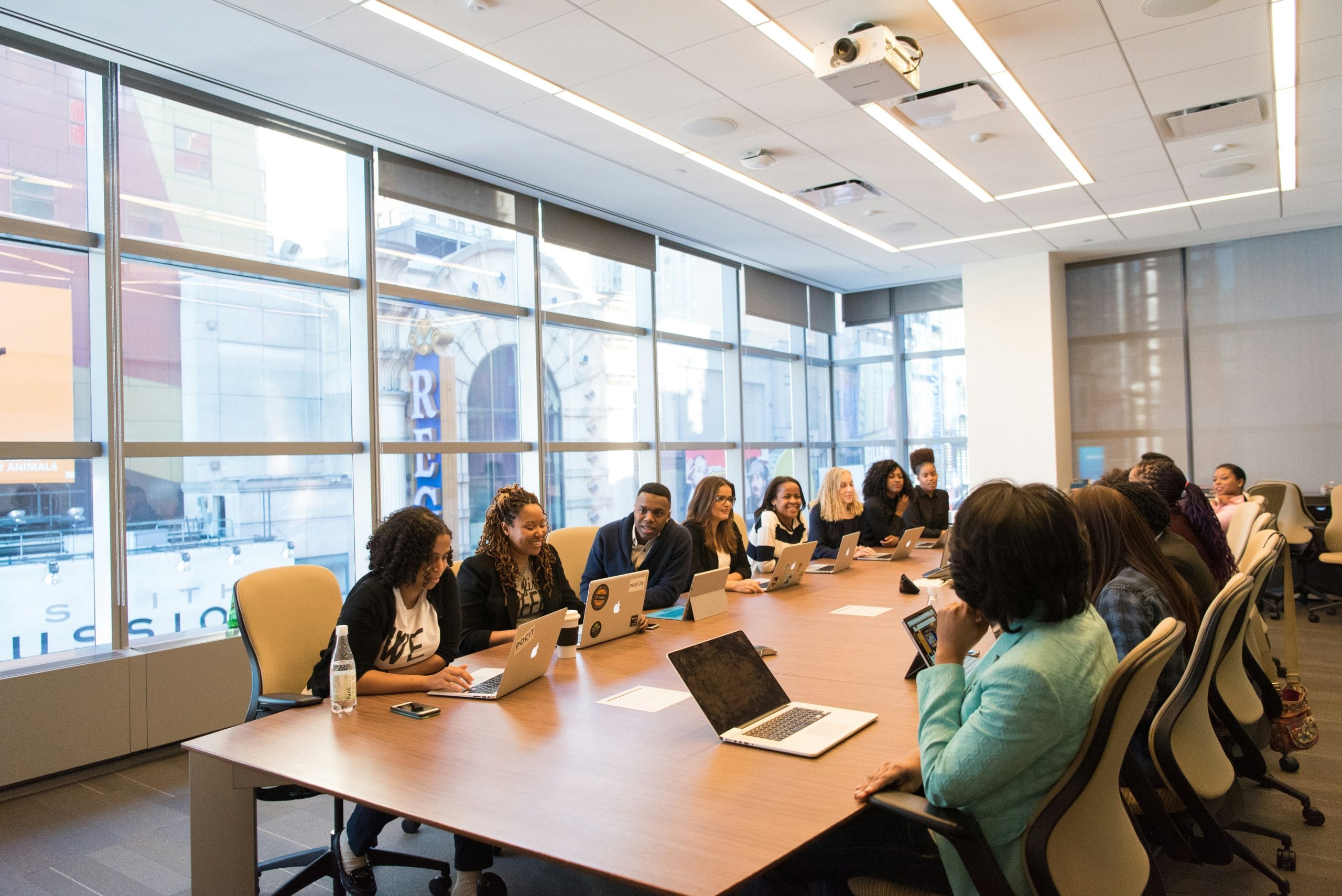
In our previous article The Future of Work: Disintegration or a Creative Shift we spoke about the opportunities many businesses and employees gain when embracing the concept of working from home. However, the excitement around telecommuting is not only positive. Companies and their staff are having to adjust their organization and work practices to the new freedoms of movement and communication without jeopardizing their productivity and causing havoc in the existing processes.
Telework is a complex arrangement with a delicate equilibrium based on trust and business integrity. As much as technology allows us to accomplish wondrous tours de force across continents and time zones, the human factor of trust is still valid when it comes to work ethics and professional commitment.
Some companies still battle the need to have all employees at one location, work tensions and differences of opinion notwithstanding. It was only two years ago that former Google executive and current CEO of Yahoo, Marisa Mayer – banned telecommuting. A company memo that leaked accidentally in late February, 2013, reads:
To become the absolute best place to work, communication and collaboration will be important, so we need to be working side-by-side. That is why it is critical that we are all present in our offices. Some of the best decisions and insights come from hallway and cafeteria discussions, meeting new people, and impromptu team meetings. Speed and quality are often sacrificed when we work from home. We need to be one Yahoo!, and that starts with physically being together.
Although it is fading away, management mistrust is a serious reason why working from home is not available to all employees. Not all companies have given up the sweatshop mentality across all corporate levels. True, setting and measuring performance goals is becoming more complex when teams are decentralized. But here is the deal: 75% of the high management across America put their faith in their employees and are not concerned about difference in performance from a distance.
The difficulty in accepting and implementing telecommuting programmes also lies in the question: is working from home up to everyone’s capabilities? The social aspect of work, like the social aspect of entertainment, are influencing factors when different types of personalities are in front of the screen. Telephone, e-mail and chat are a perfect communication media for some people who feel comfortable with online games and virtual discussions in their free time. But others need the human contact, the afternoon coffee and the face to face meeting to keep stimulated. Actually, working from home is not for everyone.
The successful and reliable telecommuters are self-motivated, they are technically advanced and know how to deal with communication issues remotely. What is more, they have a designated home-office area and they don’t translate telecommuting into alternative for daycare.
The ability to separate the public from the private domains when working from home is a gray area where much research is done by organizational psychologists. We still don’t know what are the long term effects. Telecommuting influences the modern family and how the demands of the modern family press companies to create benefits, such as 50% of working hours from home.
Ambitious staff are also careful about remote work and are more likely to stick to their office desks for fear of neglect. The idea that their management would not give them enough credit or see their potential is still lurking there, so companies that implement telecommuting programs are one step ahead in business organization: they adopt performance-based measurement systems where results count more than presence.
Paradoxically, while telecommuting is not desirable for some, others strive to earn this benefit. The standard for selecting employees who are going to do a good job from home is not yet uniform and that creates tensions in some teams as jealousy is not inhuman.
Security is less of a concern for both employers and employees. More than 90% of U.S executives responsible for information security believe that data problems, if any, do not stem from telecommuting. Actually, the major concern is with work taken for home by regular office employees who are not trained in remote access, telework technologies, and the use of the needed tools.
it’s no news that technology is not an obstacle to telecommuting anymore, as IT infrastructure changes are now being made worldwide. Increasingly, employees have easy access to company systems, software, and data. In fact, some managers report improved collaboration in their teams, because distance buffers personality differences and productivity is boosted.
We see a clear shift from office bound work to decentralized work. The illusion that every day is equally productive is no longer the main principle for many companies who view the work cycles as they see the changing markets. Successful organizations listen to their employees and in return, the employees remain loyal and informed. In times of great technological advances, work in every sector is changing.
Instead of being weary of the current velocity, we chose to have a conversation with one of the founders of Onboard, a man who didn’t quite envision his career in the telecommunications sector, but has always had an aptitude for cutting-edge technologies. Tune in for our conversation with Alexander Stefanov, VP of Business Development – an advocate of flexible work conditions and mobility.
Sources
Global Workplace Analytics
Back To the Stone Age? New Yahoo CEO Marissa Mayer Bans Working From Home
Marisa Mayer